
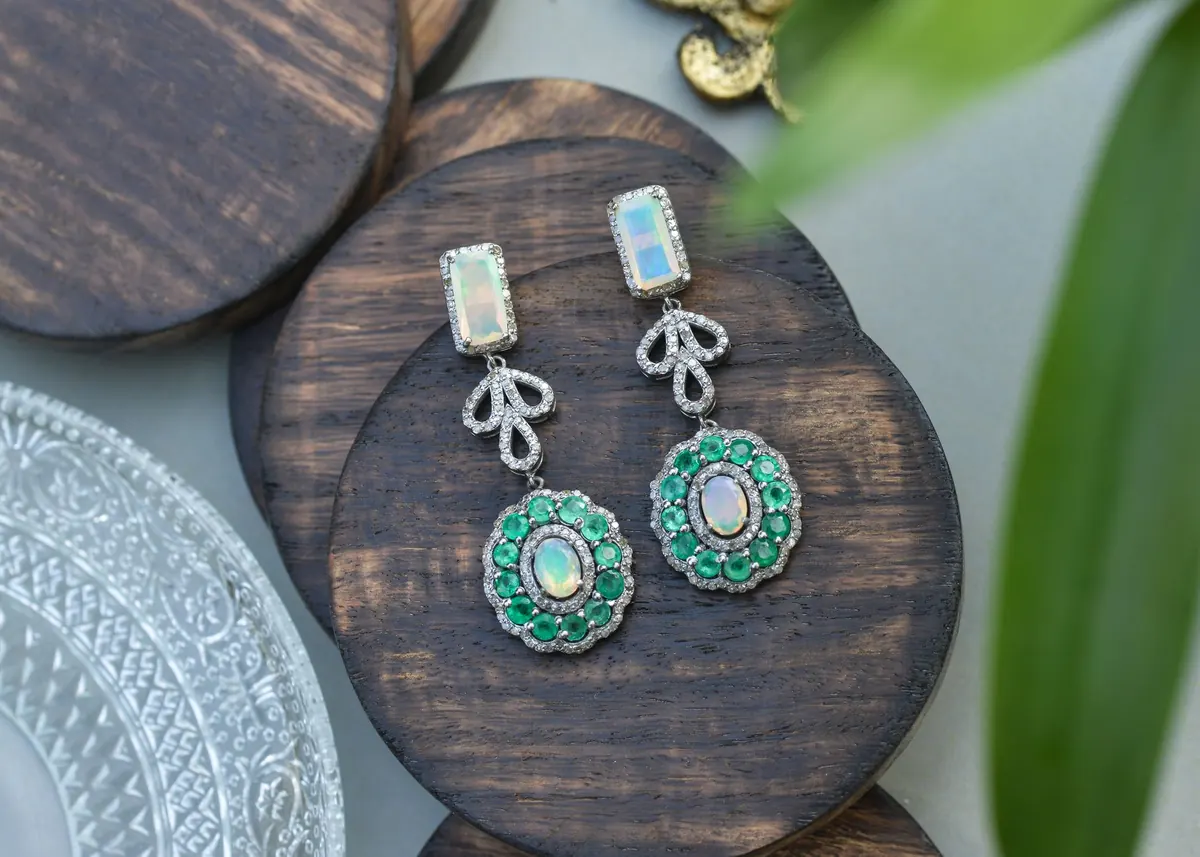
Crystal earrings are one of the few jewelry purchases where a photograph can quietly mislead you. Not through dishonesty — a 10mm stone shot at close range can look like a statement piece and arrive looking like a modest stud. Add a screen that renders color differently from the next one, a listing that never mentions weight, and a return policy tucked three clicks deep, and it becomes easy to spend money on something you would have walked past in a shop.
Most of that disappointment is preventable, and none of it requires becoming a gemologist. It requires reading the right lines in the listing and asking two or three blunt questions before checkout. These are the mistakes that come up most often, and what to do instead.
Mistake one: buying the photo instead of the measurements
Listings rarely show scale. A pair of "statement" crystal drops might be 45mm long or 18mm, and the photograph looks nearly identical either way because the ear is cropped tight and the background is a soft blur. The same applies to hoops: a huggie photographed on a model can look generous, then arrive sitting tighter than you expected.
Find the numbers and convert them into something your hands understand. Take a scrap of paper, measure and cut a strip at the stated drop length, and hold it against your earlobe in the mirror. Do the same for a stone diameter by drawing a circle. Then compare it with a pair you already wear happily — that comparison is worth more than any on-model shot.
Read the fine print of the measurement
- Total length versus drop: if the listing says the figure includes the ear wire, a 40mm earring with a 15mm hook is a 25mm drop. That difference changes how a piece sits.
- Per earring or per pair: some listings quote the length of one earring, others the pair laid end to end. The gap can be double.
- Hoop inner diameter: for huggies and small hoops, the inner measurement is the one that decides comfort, not the outer size.
- Wire gauge: a 20-gauge post is standard for many piercings; 18-gauge is slightly thicker. If your piercings are new or sensitive, this matters.
Mistake two: ignoring the back and finding type
The back is the part you never see in the main photo and the part that decides whether the earring stays put. A heavy crystal drop on a plain butterfly post will droop forward and slowly work its way loose; the same stone on a lever back sits where you placed it. If you wear scarves, cycle, or take calls with a shoulder pinched to your ear, a French wire hook is a small daily annoyance waiting to happen.
Match the finding to the job. Lever backs and screw backs suit heavier pieces and anyone who sleeps or naps in earrings. Butterfly posts are fine for light studs and small drops. Threadless flat-back posts are worth learning about if your ears react to pressure from behind the lobe. Clip-ons deserve a mention too: a padded screw clip distributes weight far better than a thin spring clip.
Check the metal of the back as carefully as the front. It is common for a listing to describe a sterling silver front and a steel or plated brass post. If you have a known metal sensitivity, ask directly what the post and backing are made of, and speak to a doctor or piercer about anything beyond mild irritation.
Mistake three: forgetting that weight is a real number
Two earrings can look identical and feel completely different by hour four. A pair of long drops set with several stones can pull the lobe down and turn a good outfit into a headache by mid-afternoon. Conversely, a hollow or resin-set piece may feel so light that it swings into your neck every time you turn your head.
If weight is not listed — and it often is not — ask. Sellers who make their own pieces can usually put a pair on a kitchen scale in under a minute. As a rough guide, many people find a few grams per earring comfortable for all-day wear and reserve anything noticeably heavier for evenings or short outings. Your own tolerance is the only real measure, so test new heavier pairs at home before committing to a long day in them.
If a listing makes you guess, ask. A seller who answers a measurement or weight question clearly and quickly is a seller worth buying from.
Mistake four: assuming "crystal" means one thing
The word gets used loosely. It might describe natural quartz, precision-cut glass made to mimic gemstone sparkle, lead glass, resin, or a dyed and treated stone. None of those are automatically bad — but they behave differently, photograph differently, and should be priced differently. A listing that says only "crystal" and nothing else has told you very little.
Look for specifics: the stone name, whether the color is a coating, and whether that coating sits on the surface or beneath it. Surface-coated stones can wear at the edges and the points of facets over months of wear, especially if they are stored loose in a bowl with other jewelry. Natural stones vary from piece to piece, so ask whether the pair you receive will match the photo closely or whether slight variation is expected.
On the metal side, distinguish sterling silver from gold plating over brass, and both from gold fill or solid gold. Plating on earrings that touch skin and hair tends to thin first at the edges of the finding. Ask what the base metal is, and check the care instructions before you buy rather than after.
Mistake five: skimming the return policy
Earrings are frequently excluded from returns for hygiene reasons, and many shops mark pierced jewelry as final sale. That is not a trick, but it does mean the usual safety net is gone. Read the policy before you order rather than assuming you can send a disappointing pair back.
Look for the specific answers to these questions: how long is the return window; is the item final sale or made to order; is there a restocking fee; who pays return shipping; and does trying the earrings on count as "worn" and disqualify them? A shop that answers all five clearly is generally a shop that has thought about its customers. Rules differ by country and by shop, so if a policy seems unclear or unfair, check your local consumer protection guidance before ordering.
Mistake six: missing the small listing details
A few lines further down the page usually settle the remaining doubts. Check whether the listing is for a pair or a single earring — the price can look like a bargain until you realize you are buying one. Check whether the photo shows two matching earrings or two similar ones from the same batch, since natural and hand-set pieces can differ. Look at the dispatch time on made-to-order designs, and add shipping and any import charges to your mental total before comparing prices.
Finally, note the care instructions and whether a box or pouch is included. Crystal pieces stored loose with metal chains will dull and scratch, and a shop that tells you how to store its work is usually a shop that expects it to last.
A five-minute check before you buy
Before you click through to payment, run this quick sequence:
- Find the drop length, stone size, and hoop diameter, and compare them with a pair you already own.
- Confirm the finding type and the metal of both the front and the post.
- Check the weight per earring, or message the seller to ask.
- Read exactly what the stone is and whether the color is a coating.
- Read the return policy in full, including hygiene exclusions.
- Confirm pair versus single, dispatch time, and shipping cost.
If you can answer all six, you are buying with the same information you would have in a shop with the earrings in your hand. If the listing leaves two or three of those blank, save it and send a short message. A clear reply is a good sign; silence before a sale tells you plenty about what to expect afterwards.
Photo: Arif khan / Pexels